
River Crossing in Iceland: Your Safety Beginner’s Guide
Learn how to safely cross rivers in Iceland’s Highlands, choose the right 4x4, avoid dangerous roads, and understand rental insurance exclusions.
Exploring Iceland’s Highlands is one of the most unforgettable adventures you can experience during a road trip. Remote volcanic landscapes, geothermal valleys, black deserts, and mountain tracks make the Highlands a dream destination for travelers looking to explore beyond the main tourist routes.
However, driving in the Highlands also comes with unique challenges, especially river crossings. Many F-roads in Iceland include unbridged rivers that drivers must cross in order to continue their journey. For inexperienced drivers, river crossings can quickly become dangerous and expensive if proper precautions are not taken.
This guide explains everything beginners need to know about river crossings in Iceland, including safety tips, vehicle requirements, insurance limitations, and which roads should be avoided.
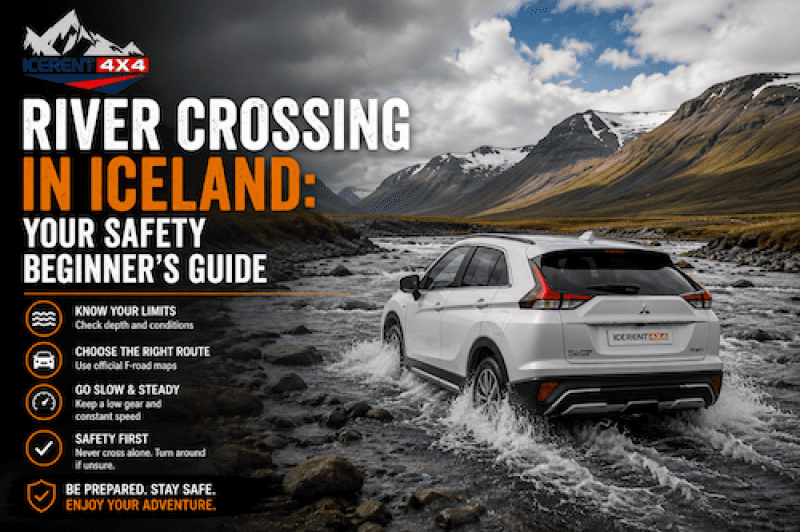
What is River Crossing in Iceland?
A river crossing in Iceland refers to driving a vehicle directly through an unbridged river along an F-road or Highland track.
Unlike standard roads with bridges, many remote Highland routes pass through glacial rivers, streams, and water channels that drivers must cross carefully using a 4x4 vehicle.
River crossings vary significantly depending on:
- Water depth
- River current
- Weather conditions
- Season
- Glacial melt
Some crossings are shallow and relatively easy during good weather, while others can become extremely dangerous even for experienced drivers.
Where are River Crossings Located?
River crossings are mainly found in Iceland’s Highlands along F-roads and remote mountain tracks. They are not located on the main Ring Road (Route 1), where bridges are used instead.
Popular Highland routes with river crossings include:
- F206
- F210
- F233
- F249
- Parts of F88 and F26
The Highlands are only accessible during summer, usually between June and September, depending on snow and road conditions.
Drivers should understand that Highland roads are much more demanding than regular Icelandic roads and require careful planning.
What to Know Before Attempting a River Crossing in Iceland
Crossing rivers in Iceland should never be taken lightly. Conditions can change quickly, and even experienced drivers sometimes turn around if the water appears unsafe.
Choose the Right 4X4 Vehicle
Not all 4x4 vehicles are equally capable of handling river crossings. Some small SUVs may legally qualify for F-roads but still lack the ground clearance needed for deeper rivers.
For serious Highland driving, larger 4x4 vehicles with high ground clearance are strongly recommended.
Important features include:
- High ground clearance
- Good traction
- Low gear capability
- Suitable tires for rough terrain
Always confirm with your rental company which roads your vehicle is allowed to drive on.
Water Damage and Rental Insurance Exclusions
One of the most important things travelers should understand is that river crossing damage is usually not covered by rental insurance in Iceland.
If water enters the engine, electronics, or interior of the vehicle:
- Insurance coverage is often void
- Repair costs can be extremely expensive
- The renter is typically fully responsible
Even premium insurance packages commonly exclude water damage caused by river crossings.
Assess River Conditions
Before crossing any river, drivers should stop and carefully assess conditions.
Key things to evaluate include:
- Water depth
- Strength of the current
- Riverbed surface
- Entry and exit points
- Flow speed
If another vehicle crosses safely, observe the route and water level carefully. However, never assume conditions are automatically safe for your vehicle.
If you are uncertain, do not attempt the crossing.
Check Weather & Road Condition
River conditions in Iceland can change dramatically throughout the day due to rain and glacial melt.
Warm afternoons often increase water levels because glaciers melt faster during higher temperatures.
Before entering the Highlands:
- Check road conditions
- Review weather forecasts
- Monitor river warnings
- Verify F-road openings
Strong rain or storms can quickly make rivers dangerous or impassable.
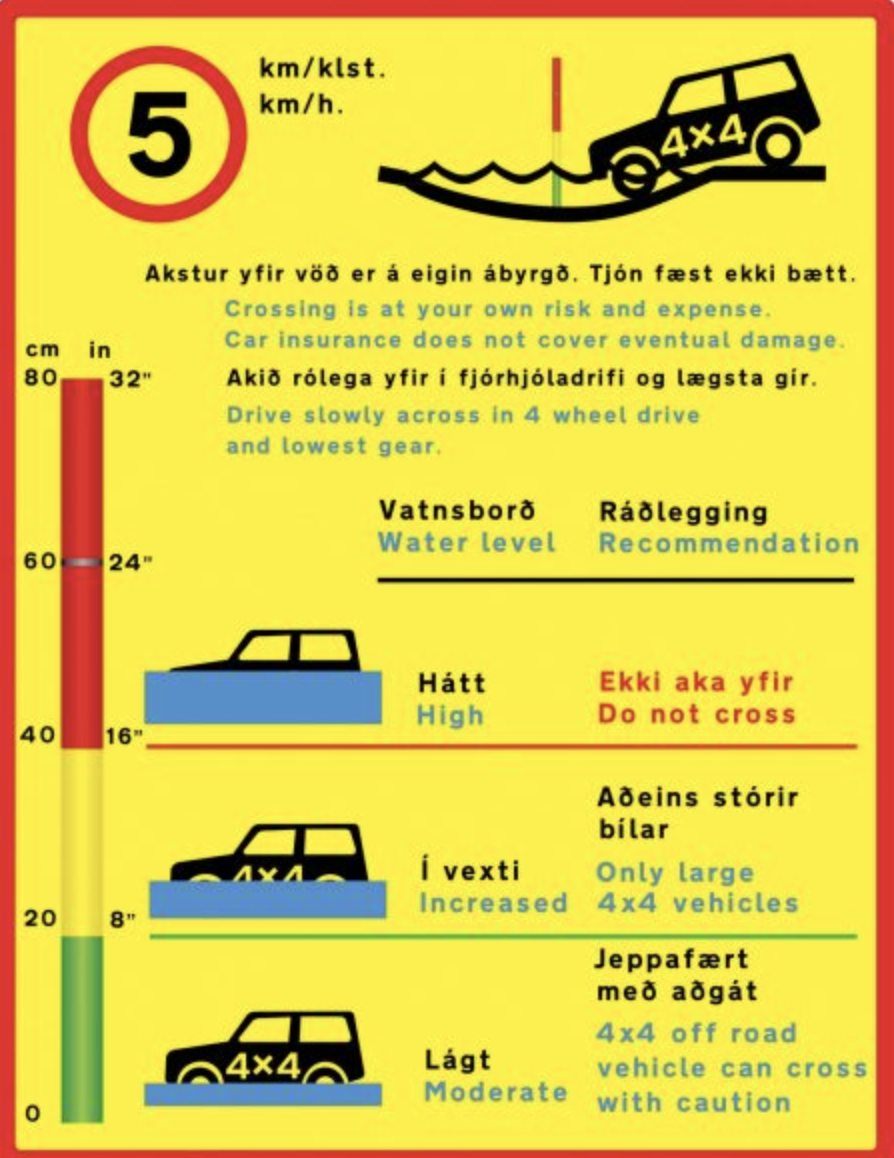
How to Cross a River in Iceland?
River crossings should only be attempted when conditions are safe and the driver feels fully confident. If you are unsure at any point, the safest decision is always to turn around.
Here are the recommended steps for crossing rivers in Iceland safely:
Step 1: Stop and Inspect the River
Never drive directly into a river without stopping first.
Get out of the vehicle and examine:
- Water depth
- Current strength
- Large rocks
- Exit route on the opposite side
Some experienced drivers carefully walk through shallow rivers to check depth, but this should only be done when conditions are safe.
Step 2: Watch Other Vehicles
If possible, observe another 4x4 crossing first. This can help identify:
- The safest driving line
- Hidden obstacles
- Approximate water depth
However, remember that larger vehicles may handle conditions differently than your own.
Step 3: Select Low Gear
Use low gear if your vehicle has it and maintain a slow, steady speed throughout the crossing.
Avoid:
- Sudden acceleration
- Braking in the water
- Gear changes mid-crossing
Stopping in the middle of the river can allow water to enter the exhaust or engine compartment.
Step 4: Drive Slowly and Steadily
Enter the river slowly and create a gentle bow wave in front of the vehicle.
Maintain constant momentum while avoiding splashing or excessive speed.
Step 5: Exit Carefully
Once across, continue slowly until fully clear of the water and confirm the vehicle is operating normally.
If warning lights appear or the engine behaves unusually, stop immediately in a safe area.
IMPORTANT SAFETY WARNING:
Some rivers in Iceland are considered extremely dangerous and should not be attempted by tourists.
One of the most well-known examples is the Krossá river on road F249 near Þórsmörk. This river is highly unpredictable, deep, and fast-moving. Even experienced drivers have lost vehicles attempting the crossing.
Many car rental companies in Iceland specifically prohibit driving on F249 beyond certain points, even with large 4x4 vehicles. It is strictly forbidden to drive Icerental4x4 vehicles on F249.
Drivers should always respect rental restrictions and avoid unnecessary risks.
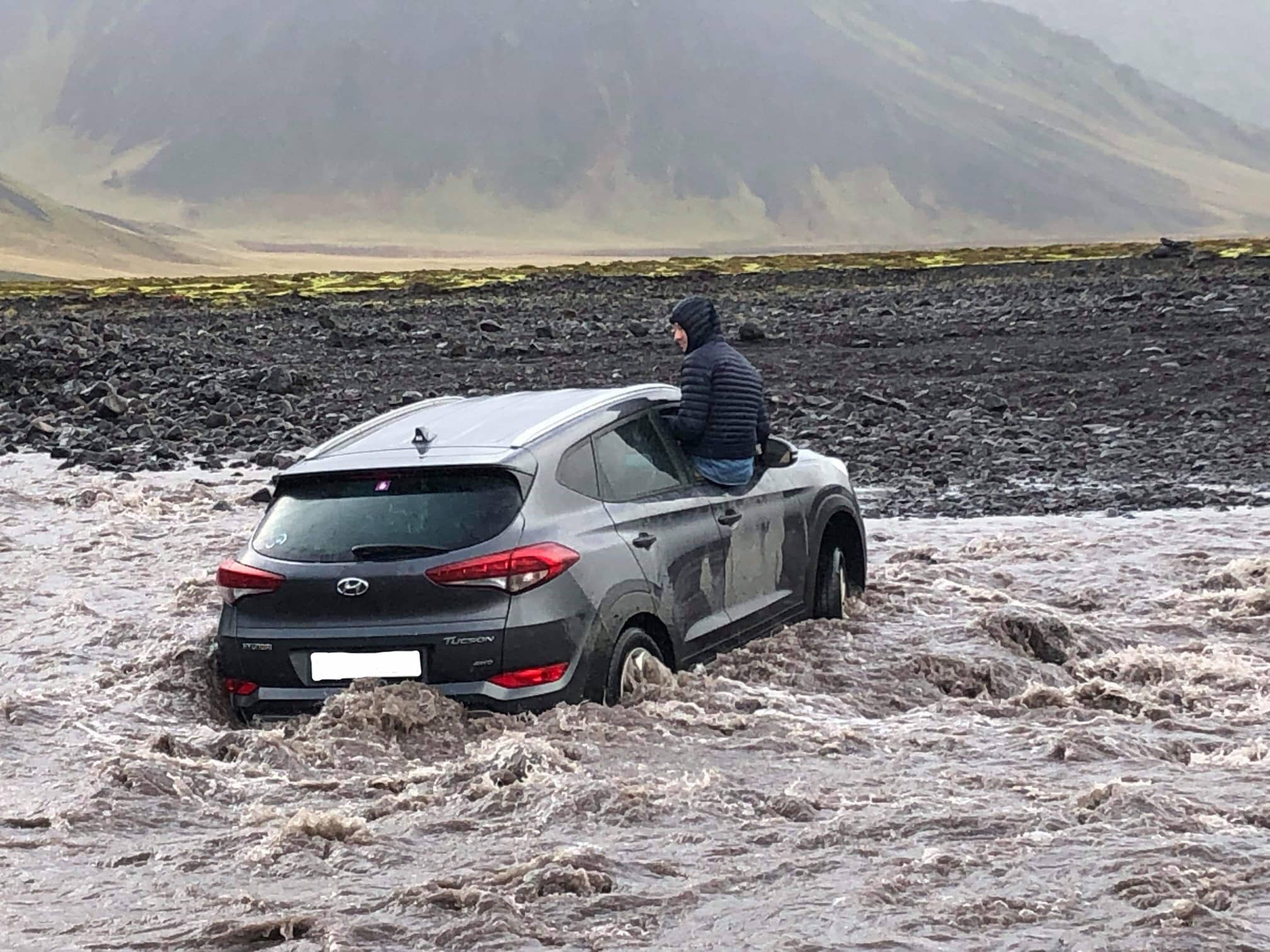
Are There F-Roads Without Major River Crossings in Iceland?
Yes. Some Highland roads are easier for beginners because they either have no major river crossings or only small shallow streams during normal summer conditions.
These routes are often recommended for travelers exploring the Highlands for the first time.
Road (F)35
F35, also known as the Kjölur Route, is one of the easiest Highland roads in Iceland.
The road connects the south and north of Iceland through the Highlands and usually does not include dangerous river crossings.
It is popular among travelers visiting:
- Hveravellir geothermal area
- Kerlingarfjöll mountains
- Highland landscapes
Road conditions can still be rough, but it is considered one of the more accessible F-roads.
F208 North
The northern section of F208 is another relatively beginner-friendly Highland route.
This road provides access to Landmannalaugar and features stunning lava fields, colorful mountains, and geothermal landscapes.
Although conditions can vary, the northern section generally avoids the large river crossings found on the southern part of F208.
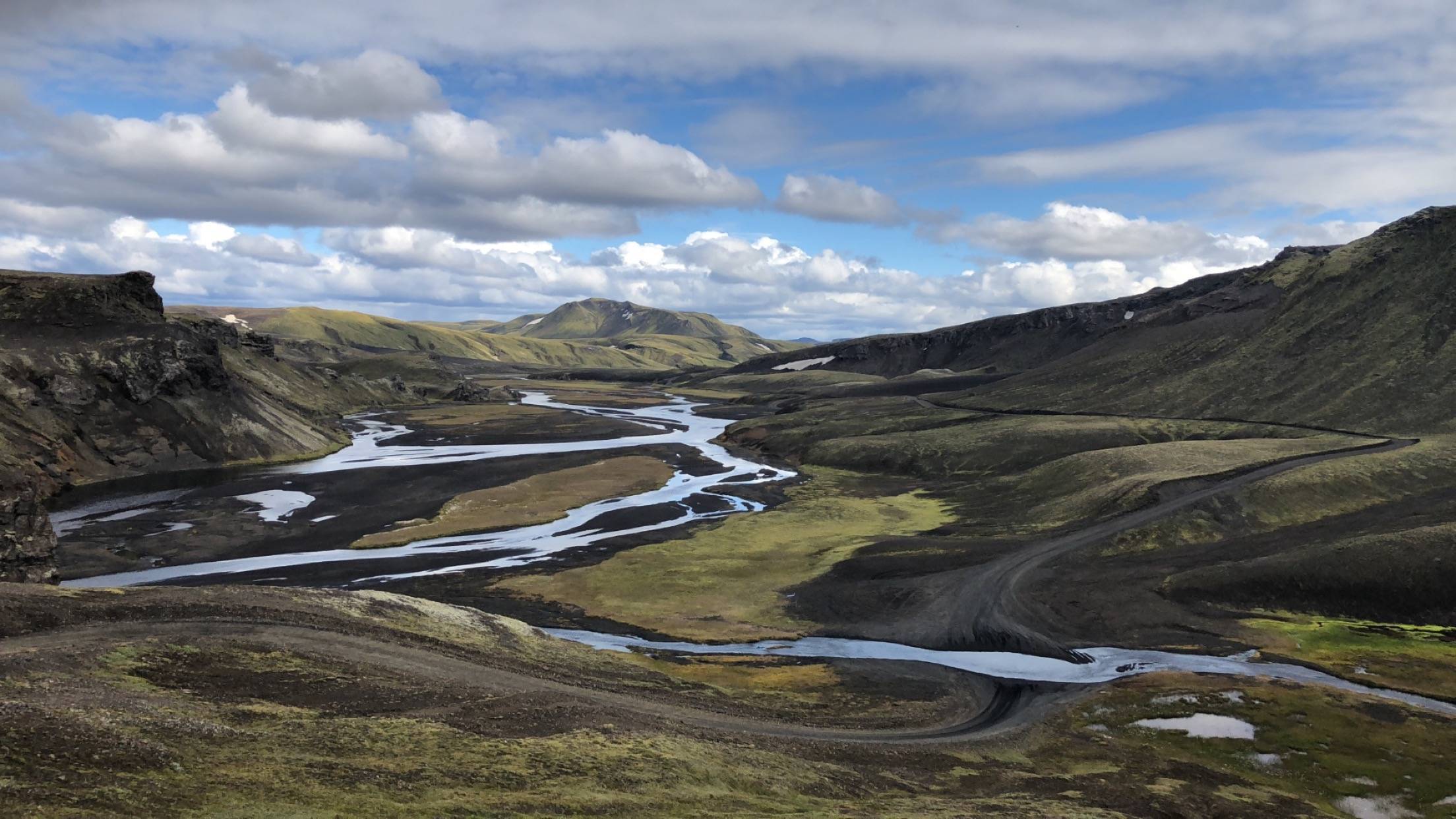
Safety Tips for Traveling in the Highlands
Traveling safely in Iceland’s Highlands requires preparation and caution.
Essential safety recommendations include:
- Always drive a proper 4x4 vehicle
- Carry extra food and water
- Keep fuel levels high
- Download offline maps
- Expect limited phone coverage
- Avoid traveling alone on difficult roads when possible
- Inform someone about your route
Important resources and apps include:
- 112 Iceland emergency app
- SafeTravel
- Icelandic Road and Coastal Administration road updates
- Icelandic weather forecasts
Because fuel stations are rare in the Highlands, drivers should always refuel before entering remote regions.
Frequently Asked Questions:
Here are some of the most common questions travelers ask about river crossings in Iceland.
- Are there unbridged rivers on the Ring Road (Route 1)?
No. The Ring Road uses bridges for river crossings, so drivers do not need to cross rivers directly on Route 1. River crossings are mainly found on Highland F-roads.
- Do car rental insurance cover river crossings in Iceland?
In most cases, no. Most car rental insurance policies in Iceland specifically exclude damage caused by river crossings or water entering the vehicle.
Drivers are usually fully responsible for repair costs related to water damage.
- Are all rivers safe to cross in Iceland?
No. Some rivers are shallow and manageable during good conditions, while others can become extremely dangerous. Water depth and current can change rapidly due to weather and glacial melt. Drivers should never attempt a crossing if they feel uncertain.
Start Your Iceland the Highlands Adventure
Driving through Iceland’s Highlands is an unforgettable experience filled with volcanic landscapes, remote valleys, geothermal areas, and incredible scenery far from the main tourist routes.
However, Highland travel requires preparation, caution, and respect for Iceland’s powerful natural conditions. Understanding how river crossings work, especially knowing when not to attempt them, is essential for staying safe during your adventure.
With the right 4x4 vehicle rental, careful planning, and responsible driving, you can safely explore some of Iceland’s most spectacular and remote destinations.
