
Iceland Speed Limits: Everything You Need to Know
Learn about Iceland speed limits, speeding fines, speed cameras, road signs, and safe driving tips for tourists renting a car in Iceland.
Driving in Iceland is one of the best ways to experience the country’s waterfalls, glaciers, black sand beaches, and remote highlands. However, Iceland’s roads can be very different from what many travelers are used to. Weather conditions change quickly, roads may switch from paved asphalt to loose gravel without warning, and many rural routes are narrow or winding.
Understanding Iceland’s speed limits is essential for both your safety and avoiding expensive fines during your trip. Whether you are driving in Reykjavík, exploring the Ring Road, or venturing into the Highlands with a 4x4 rental, knowing the rules of the road will help you enjoy a smoother and safer journey.
Understanding Speed Limits by Road Type
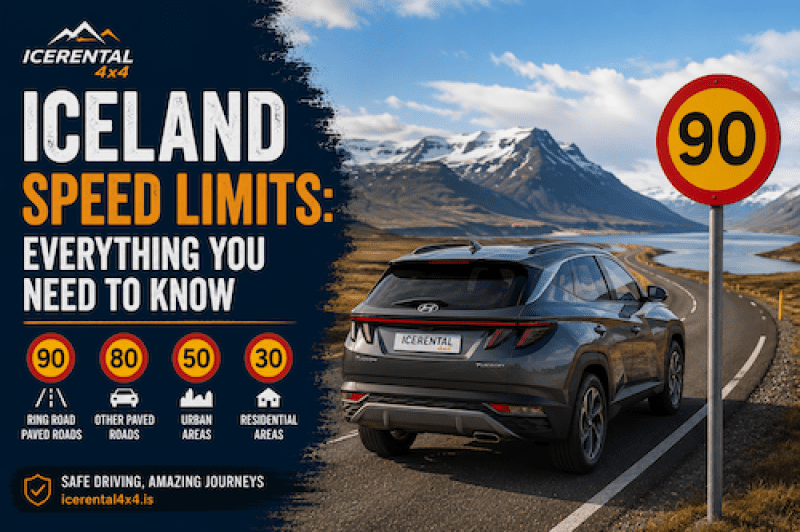
Speed limits in Iceland vary depending on the type of road and the driving conditions. Icelandic authorities strictly enforce these limits through speed cameras and police controls, especially in areas with heavy tourist traffic.
Urban and Residential Areas
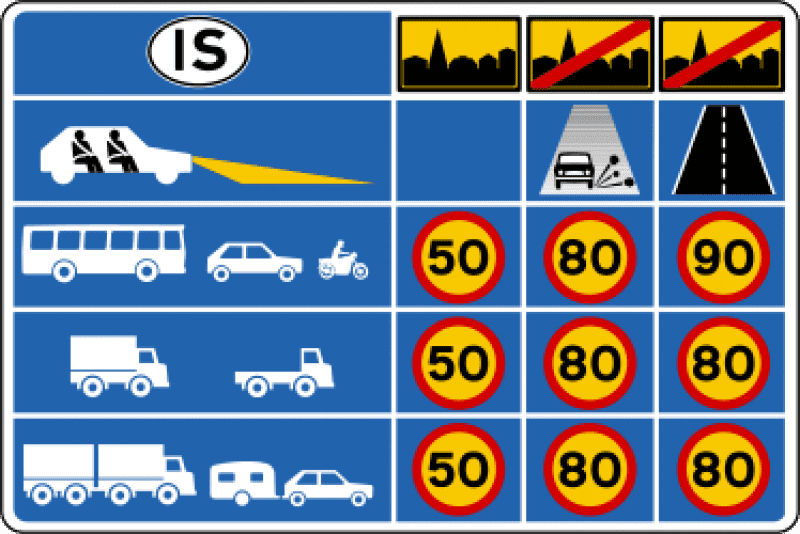
In cities, towns, and residential neighborhoods, the standard speed limit is usually 50 km/h (31 mph). In some residential zones, school areas, or busy pedestrian streets, the limit may be reduced to 30 km/h or 40 km/h.
Drivers should pay close attention to posted signs, especially when entering Reykjavík or smaller villages along the Ring Road. Pedestrians and cyclists always have priority at marked crossings, and fines for dangerous driving in urban areas can be significant.
Paved Roads & Ring Road
Most paved rural roads in Iceland, including large sections of Route 1 (the Ring Road), have a maximum speed limit of 90 km/h (56 mph). This is the highest legal speed limit in the country.
Although the roads may appear open and empty, weather and road conditions can change rapidly. Strong winds, rain, fog, snow, or icy surfaces may require drivers to reduce their speed well below the posted limit. Bridges are often single-lane, and sheep frequently wander onto the road during summer.
Gravel Roads
Gravel roads are common in Iceland, particularly in the Westfjords, North Iceland, and rural areas outside the main tourist routes. The maximum speed limit on gravel roads is generally 80 km/h (50 mph).
However, many gravel roads require much slower driving due to loose surfaces, potholes, blind hills, or sharp corners. Drivers unfamiliar with gravel roads should reduce speed significantly and avoid sudden braking or steering movements.
F-Roads & Highlands
F-roads are mountain roads that lead into Iceland’s Highlands and are only open during summer. These roads require a 4x4 vehicle by law and are often rough, rocky, and unbridged.
There is no single universal speed limit for all F-roads, but most drivers travel between 30–60 km/h depending on conditions. River crossings, large potholes, lava fields, and steep terrain make high speeds extremely dangerous.
Always check road conditions before entering the Highlands and never attempt to drive an F-road with a 2WD rental vehicle.
Understanding Speeding Fines
Speeding fines in Iceland are expensive compared to many other countries. Even small infractions can result in substantial penalties, especially in urban areas or near schools.
Fines increase depending on:
- How much the driver exceeded the speed limit
- The type of road
- Whether the offense occurred in a residential area
- How quickly the fine is paid
In severe cases, dangerous speeding may also lead to license suspension or court proceedings.
Speed Road Signs
Understanding road signs is extremely important when driving in Iceland, especially for visitors unfamiliar with local traffic rules. Speed limit signs are circular with a red border and display the maximum legal speed in kilometers per hour.
Drivers should also pay attention to:
- Gravel road warning signs
- One-lane bridge signs
- Sharp curve warnings
- Animal crossing signs
- Tunnel and mountain road alerts
- Road closure notices during winter
You can learn more about important Icelandic road signs before starting your road trip.
Iceland Speed Cameras
Speed cameras are common throughout Iceland and are used to improve road safety. Many cameras are placed in accident-prone areas, tunnels, near towns, and along heavily traveled tourist routes.
Drivers should never assume that empty roads mean there is no enforcement.
Fixed Cameras
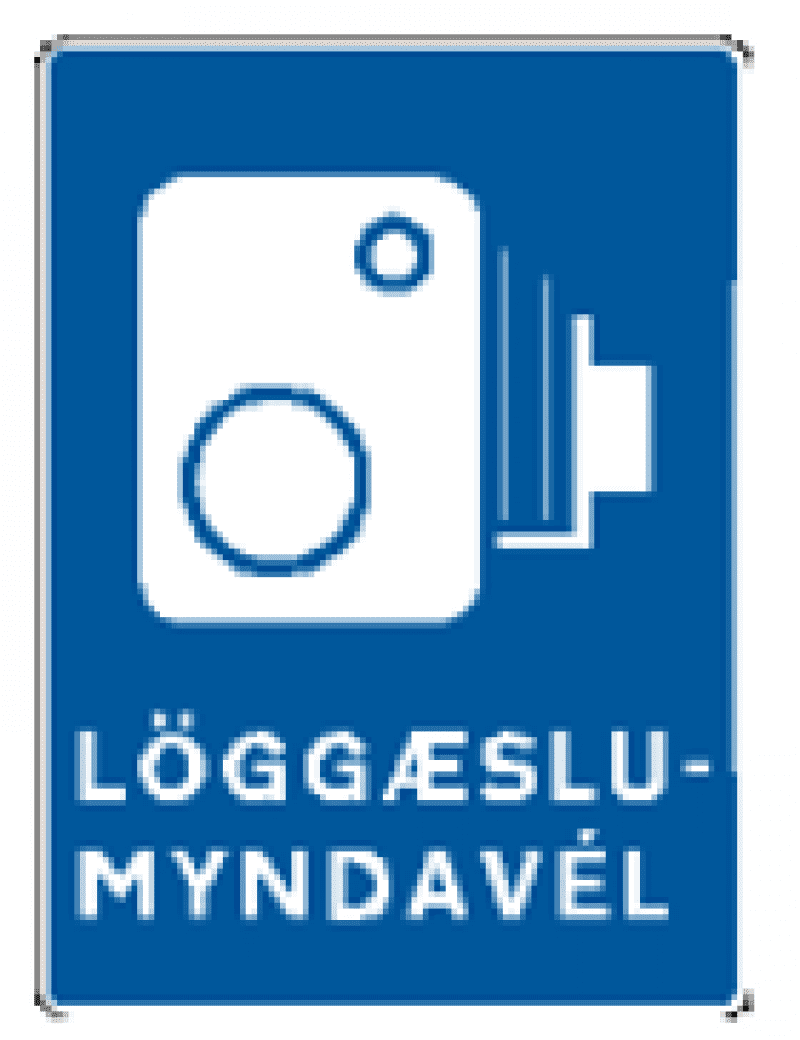
Fixed speed cameras are permanently installed along certain roads in Iceland. Before reaching one, drivers will usually see a blue or white camera warning sign indicating speed monitoring ahead.
These cameras are often located:
- Near Reykjavík and larger towns
- At tunnel entrances
- Along sections of the Ring Road
- Near schools or dangerous intersections
Most fixed cameras are mounted on poles beside the road and are easy to spot if drivers are paying attention.
Mobile Cameras and Police Radar
Icelandic police also use mobile speed controls and radar monitoring. Officers may park unmarked vehicles along rural roads or use handheld radar devices in areas with frequent speeding violations.
Mobile checks are especially common during summer when tourist traffic increases dramatically.
How Much Cost a Speeding Ticket in Iceland
The cost of a speeding ticket depends on how much the speed limit was exceeded. Icelandic fines are updated periodically, but the following table provides a general overview of what drivers can expect.
|
Speeding Violation |
Estimated Fine |
|
Up to 10 km/h over limit |
ISK 30,000–50,000 |
|
11–20 km/h over limit |
ISK 50,000–80,000 |
|
21–30 km/h over limit |
ISK 80,000–120,000 |
|
More than 30 km/h over limit |
ISK 120,000+ |
|
Severe speeding offenses |
Possible license suspension |
Fines are usually higher in residential areas and school zones.
How to Pay a Speeding Fine in Iceland
If you receive a speeding ticket in Iceland, it is important to pay it as soon as possible. Drivers who pay quickly may receive a 25% discount on the original fine amount.
If the fine is not paid within the initial deadline:
- An administrative fee may be added
- The fine amount can increase significantly
- Additional collection costs may apply
Tourists driving rental vehicles may receive the fine through the rental company after the trip ends. In many cases, the rental company will also charge an administrative handling fee in addition to the official police fine.
What if You Get a Ticket with a Rental Car in Iceland?
Getting a speeding ticket in a rental car is relatively common among tourists unfamiliar with Icelandic roads and conditions. Fortunately, the process is usually straightforward.
How the Law Enforcement Identify the Driver
When a speed camera captures a violation, authorities identify the vehicle through the license plate number. If the vehicle is a rental car, police contact the rental company, which then provides the renter’s information according to Icelandic law.
The renter listed on the rental agreement is normally considered responsible for the violation unless another driver was officially registered on the contract.
How Car Rental Companies Process Fines
Most rental companies in Iceland process speeding tickets after receiving notification from authorities. The company typically:
- Pays or forwards the fine
- Charges the renter’s credit card
- Adds an administrative processing fee
The processing fee varies between rental companies but is usually separate from the official speeding fine.
Safe Driving Tips in Iceland
Driving safely in Iceland requires preparation, patience, and flexibility. Road conditions can change very quickly depending on the season and weather.
Respect The Speed Limits
Speed limits exist for a reason, especially in Iceland where roads can become dangerous unexpectedly. Reducing speed during rain, snow, strong winds, or gravel sections is essential for safe driving.
Do Not Go Off Road
Off-road driving is strictly illegal in Iceland and can cause serious environmental damage to fragile moss and volcanic landscapes.
Headlights & Seatbelt
Headlights must remain on at all times, day and night, even during summer with extended daylight hours. Seatbelts are mandatory for all passengers.
Single-Lane Bridges & Tunnels
Many rural roads include single-lane bridges and tunnels. Drivers must slow down, yield properly, and approach carefully. The vehicle closest to the bridge generally has priority.
Check Weather Conditions
It is important to know that weather conditions in Iceland can change within minutes. Before driving, always check forecasts, road closures, and wind warnings.
Winter storms, sandstorms, and icy roads can make driving dangerous even for experienced drivers.
Other Common Fines Tourists Should Know About in Iceland
Besides speeding tickets, there are several other fines tourists should be aware of when driving in Iceland.
Parking Tickets
Parking regulations vary depending on the town and location. In Reykjavík, parking zones are color-coded and prices differ depending on the area and time of day.
Drivers should always check parking meters, mobile payment instructions, and local restrictions before leaving the vehicle.
F-Road Driving with a 2WD
Driving on mountain roads (F-roads) with a 2WD vehicle is illegal and can void rental insurance coverage. Drivers may also receive substantial fines if they ignore road restrictions.
Off-Road Driving
Off-road driving damages Iceland’s delicate environment and is heavily punished. Tire tracks can remain visible in moss and volcanic soil for decades.
Illegal Camping
Camping outside designated camping areas may be illegal in many parts of Iceland, especially near private land or protected nature reserves.
Travelers should familiarize themselves with current Iceland camping laws before planning overnight stops.
Tunnel Tolls
Some tunnels in Iceland require payment, including the Vaðlaheiðargöng tunnel near Akureyri. Payments are usually completed online, and failing to pay on time may result in additional fees.
Frequently Asked Questions
Here are some of the most common questions tourists ask about speeding fines and driving laws in Iceland.
- Can I pay for my ticket right away?
Yes. In many cases, paying quickly allows drivers to receive a reduced fine amount, including the possible 25% early payment discount.
- What happens if I don’t pay for a speeding ticket?
Unpaid fines may increase due to administrative fees and collection costs. Rental companies may also charge the payment method provided during booking.
- Is there a speeding tolerance in Iceland?
While speed measuring devices may include small technical tolerances, drivers should never rely on unofficial “grace limits.” The safest approach is always to follow the posted speed limit.
Explore Iceland with Confidence
Driving around Iceland gives travelers the freedom to discover waterfalls, glaciers, volcanic beaches, and remote landscapes at their own pace. By understanding Iceland’s speed limits, road signs, and driving regulations, you can enjoy a safer and more enjoyable road trip.
Whether you are planning a Ring Road adventure or exploring the Highlands in a 4x4 rental, responsible driving helps protect both travelers and Iceland’s unique natural environment.
