
Northern Lights in Iceland: When, Where & How to See the Auroras
What time of year is best to see the Northern Lights in Iceland? Where are the best places to look for the aurora borealis? And can you chase them on your own with a rental vehicle?
The Northern Lights, or aurora borealis, are one of Iceland's most spectacular natural phenomena. These colorful ribbons and curtains of light appear when charged particles from the sun interact with Earth's magnetic field and atmosphere. While the aurora can be seen across the northern hemisphere, Iceland's high latitude, relatively low population density, and dramatic landscapes make it an incredible place to experience them.
The catch? The Northern Lights are natural, so there are no guarantees. The best approach is to give yourself several nights, stay flexible, monitor the forecast, and be prepared to drive to wherever the skies are darkest and clearest.
For travelers with a rental car, camper, or RV, self-driving offers an especially flexible way to chase the aurora. Instead of being tied to a tour departure time or a single viewing location, you can adapt your route to changing cloud cover and weather conditions.
Northern Lights: Key Takeaways
- Northern Lights season: Generally from late August or September through early April, when Iceland has enough darkness for the aurora to be visible.
- Best months: September through March offer long, dark nights and plenty of opportunities, although every month has its own advantages.
- Darkness is essential: The brighter the sky, the harder the aurora is to see. Summer's midnight sun makes Northern Lights viewing impossible despite solar activity.
- Cloud-free skies matter: Strong aurora activity is not enough if thick clouds are blocking the sky.
- Get away from city lights: Rural Iceland generally offers much darker skies and better viewing conditions.
- Self-driving gives you flexibility: You can move toward clearer skies rather than staying in one location.
- Check conditions before driving: Icelandic winter weather can change quickly, so never sacrifice road safety for an aurora forecast.
- You do not need a 4x4 for every trip: A suitable vehicle depends on your route, season, road conditions, and driving experience. A 4x4 can provide extra traction and confidence in challenging winter conditions.
- There are no guarantees: Patience, flexibility, and a little luck are part of the experience.
What are the Northern Lights?
The Northern Lights are a natural light display created by activity from the sun. When the sun releases charged particles into space, some of this solar material can reach Earth's magnetic environment. The particles interact with gases in the upper atmosphere, producing the shimmering colors we see as the aurora.
Green is the color most commonly associated with the Northern Lights, but stronger displays can also appear yellow, pink, purple, red, or blue. The exact colors and intensity depend on atmospheric gases, altitude, and the energy of the incoming particles.
The aurora is particularly common at high northern latitudes, which is one reason Iceland is such a popular destination for aurora hunters. It is also one of the reasons a road trip through Iceland can be so rewarding: you are not simply traveling to one attraction, but exploring a landscape that can become part of the Northern Lights experience.
How Are the Northern Lights Formed?
The origin of the aurora begins with the sun. Solar activity can eject clouds of electrically charged particles into space. When some of this material reaches Earth, it interacts with our planet's magnetic field and upper atmosphere.
Earth's magnetic field helps guide these particles toward the polar regions. When they collide with gases in the atmosphere, energy is released in the form of light.
The Northern Lights can technically occur at many latitudes, but they are much more frequently visible closer to the Arctic and Antarctic regions. Iceland's location makes it an excellent place to experience them, particularly during the dark months of the year.
The Northern Lights are one of Iceland's biggest winter attractions, but their unpredictability is part of what makes them special. You can have excellent solar activity and still miss the display because of cloud cover. Conversely, a relatively modest forecast can sometimes produce a beautiful show.
The Auroras in the Icelandic Folklore
Before modern science explained the aurora, people created stories and legends to explain the strange lights moving across the winter sky. Icelandic and wider Nordic folklore contains fascinating interpretations of this mysterious phenomenon.
Some traditions associated the lights with supernatural or celestial events, while other Nordic beliefs connected them with Valkyries, the afterlife, or extraordinary happenings in the heavens.
For a deeper look at the myths, beliefs, and stories surrounding the phenomenon, explore our guide to the northern lights folklore in Iceland.
Why a Self-Drive Is a Great Way to See the Northern Lights in Iceland
A Northern Lights road trip gives you something a guided excursion cannot always provide: freedom to respond to the conditions.
Aurora viewing is often a waiting game. You might have clear skies in one part of the country while another area is covered by clouds. With your own rental vehicle, you can check the forecast, choose a promising destination, and adjust your plans when conditions change.
A self-drive trip also lets you combine aurora hunting with Iceland's waterfalls, glaciers, beaches, mountains, geothermal areas, and small towns. The journey becomes part of the adventure rather than simply transportation between tour stops.
Self-Drive vs. Guided Aurora Tours
Guided Northern Lights tours are a convenient choice, particularly if you are uncomfortable driving in winter or are visiting Iceland for only a few days. Experienced guides can monitor conditions and take groups to suitable viewing areas.
A self-drive trip, however, provides greater flexibility. You decide when to leave, where to stop, and how long to wait. You can also build your Northern Lights hunt into a longer road trip rather than dedicating an entire evening to a tour.
For travelers who are confident driving in Icelandic conditions, self-driving can be especially rewarding.
Flexible Itinerary
Flexibility is one of the biggest advantages of an aurora road trip.
Rather than planning your entire trip around a single predicted viewing night, consider giving yourself several opportunities. If the forecast is poor one evening, enjoy another attraction and try again the following night.
Likewise, don't become too attached to a particular viewing location. If clouds are covering the sky around Reykjavík but the forecast shows clearer conditions farther west, north, or east, your itinerary can change accordingly, provided the roads are safe to travel.
Best Time of Year to See the Northern Lights in Iceland
Seeing the Northern Lights requires darkness, so the aurora season is generally considered to run from late August or September through early April. The exact viewing opportunity varies with daylight hours, weather, cloud cover, and solar activity.
September through March is a particularly popular period because the nights are long enough to provide plenty of darkness. April can still offer aurora opportunities early in the month, but increasing daylight gradually reduces the available viewing window.
There is no single "best month" for everyone. September and October can offer a combination of darkness and relatively manageable road conditions, while December through February provide very long nights but potentially more challenging winter weather.
Peak Aurora Activity & Solar Maximum
Solar activity follows an approximately 11-year cycle, and periods around solar maximum can produce more frequent and stronger geomagnetic activity. This can increase the potential for impressive aurora displays.
However, solar maximum does not mean the Northern Lights will appear every night. Cloud cover, darkness, location, and the timing of solar activity still matter.
For a road trip, it is better to think in terms of maximizing your opportunities rather than planning around a single predicted night.
Daylight Hours vs. Darkness Requirements
Darkness is essential for seeing the Northern Lights.
Iceland experiences extremely long summer days, with very little true darkness around the summer solstice. From roughly mid-April through mid-August, the sky does not become dark enough for normal Northern Lights viewing.
As autumn progresses, nighttime darkness increases rapidly. By winter, there are many hours of darkness, creating a much larger window for aurora hunting.
This is one reason late September through March is such a popular period for Northern Lights road trips.
The Equinox Effect: September & March Peaks
September and March are often highlighted as particularly interesting months for aurora hunters because they coincide with the equinoxes. Geomagnetic activity can be favorable around the equinox periods.
However, the equinox does not guarantee a Northern Lights display. Think of it as one potentially favorable factor rather than a promise of stronger auroras.
The biggest advantage of September and March may be the balance between darkness and road-trip conditions. You can have meaningful hours of darkness while still enjoying more daylight for sightseeing than you would during the darkest part of winter.
What Are the Best Conditions to See the Northern Lights in Iceland?
A successful Northern Lights hunt generally requires several factors to line up:
- Darkness
- Clear or partly clear skies
- Aurora activity
- A location with limited light pollution
- Patience
- A little luck
The Icelandic Meteorological Office's aurora forecast combines aurora activity with cloud-cover information, making it one of the most useful resources for planning an evening of aurora hunting.
Impact of Moon Phases
The moon does not prevent the Northern Lights from appearing, but a bright full moon can make a weaker aurora harder to see.
A darker moon phase can make faint aurora displays stand out more clearly against the sky. On the other hand, some photographers actually enjoy having some moonlight because it illuminates Iceland's mountains, waterfalls, glaciers, and other landscapes in the foreground.
If your priority is seeing the faintest possible aurora, a darker night can be advantageous. If your priority is landscape photography, a little moonlight can create beautiful results.
Dark Skies & Light Pollution
Light pollution is one of the easiest factors to control.
Reykjavík and other populated areas can still offer Northern Lights sightings during strong displays, but leaving the city generally gives you darker skies and a better view of faint aurora activity.
You do not necessarily need to drive hundreds of miles into the wilderness. Even getting away from concentrated urban lighting can make a noticeable difference.
Always pull completely off the roadway in a safe, legal location before stopping to watch or photograph the sky. Never stop on a road simply because the aurora suddenly appears.
No Clouds & Clear Horizons
Clouds are one of the biggest obstacles to Northern Lights viewing.
A strong aurora forecast means little if a thick layer of cloud is covering the sky above you. This is why the cloud-cover map is just as important as the aurora activity forecast.
When planning your evening, look for areas with the best combination of darkness, low cloud cover, and reasonable driving conditions.
How to Chase the Northern Lights in Iceland
Northern Lights chasing is less about finding one magical location and more about following the conditions.
Start by checking the aurora forecast and cloud cover. Then look at the road and weather conditions before deciding where to go. The official Icelandic Meteorological Office forecast shows predicted cloud cover and aurora activity, while SafeTravel provides important travel and road-condition information.
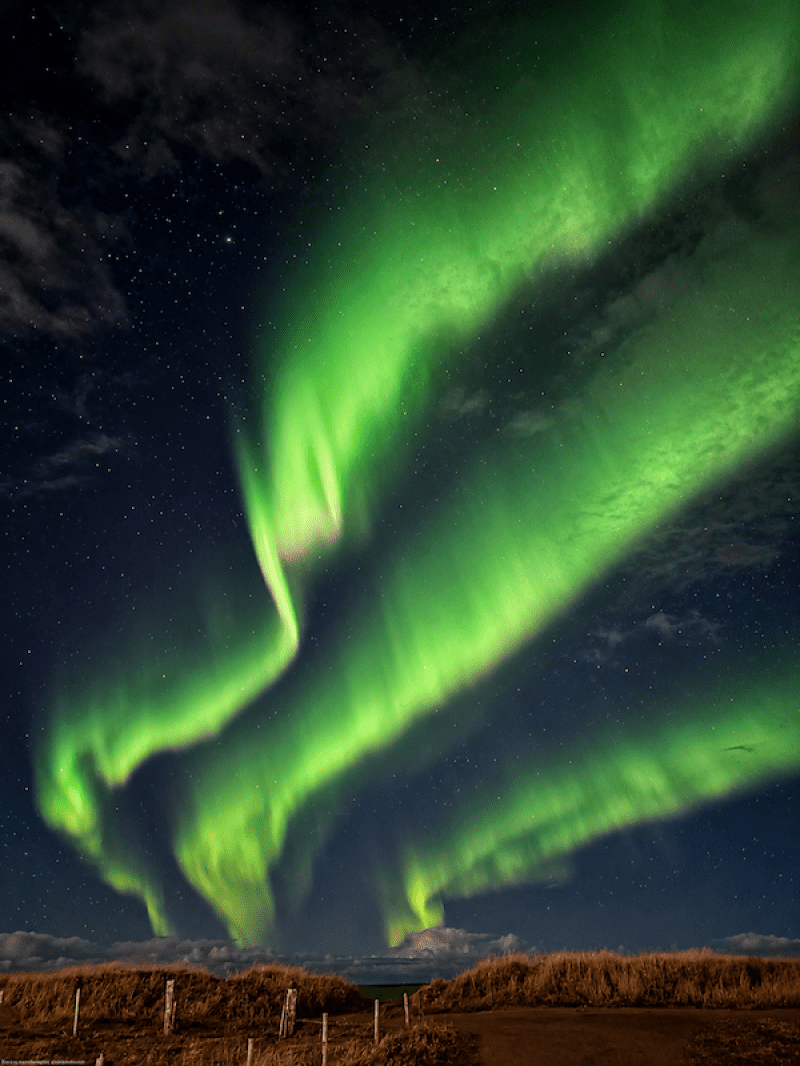
The origin of the aurora begins on the surface of the sun when solar activity ejects a cloud of gas. If one of these clouds reaches the earth it collides with the earth's magnetic field. The field is invisible, but if you could see its shape, it would make the earth look like a comet with a long magnetic tail. The auroras can be seen anywhere and have been spotted as far south as Mexico, however, they are more frequent at higher latitudes in places like Iceland, Alaska, and Canada.
The Northern Lights are one of Iceland's biggest draws for visitors in the winter. The only downside is that the Northern Lights are a natural phenomenon and thus elusive and unpredictable. If you manage to see them on your visit to Iceland, some people have described it as a life-changing event. Seeing them twirling and dancing before your eyes is truly magnificent.
How to see the Aurora Borealis
Darkness is required when looking to see the Northern Lights and as Iceland is at high latitude there is almost no darkness from mid-April until mid-August. So in that period of time, no Northern lights can be seen. The best time to see them is from late September until late March with their peak in September and March. At this time it is dark after 18:00 (6 pm) so there maximum chances of spotting one.
In order to get the best visual of the Northern Lights, we would recommend going out of the city as the lights all around, do affect their visual.

The original rule of thumb still applies: get away from city lights, find darkness, look for clear skies, and give yourself time.
Remember that an aurora forecast is a prediction, not a reservation. Conditions can change quickly, and a low activity rating can still produce an enjoyable display.
Bring warm clothing and consider taking a folding travel chair. Waiting comfortably is much easier when you are warm, dry, and prepared to spend time outside. 
How to Read the Aurora Forecast
The Icelandic Meteorological Office uses an aurora activity scale from 0 to 9. Higher numbers indicate stronger predicted activity, but you should not treat the number as a guarantee.
A low forecast can still produce visible aurora, while a high forecast can be disappointing if clouds completely cover the sky.
When planning an evening, consider the forecast as a combination of:
- Aurora activity
- Cloud cover
- Darkness
- Moonlight
- Local weather
- Road conditions
The most useful forecast is therefore not simply the place with the highest aurora number. It is the location where several favorable conditions overlap.
Understanding Cloud Cover Forecasts
Cloud cover can make or break an aurora hunt.
The Icelandic Meteorological Office's forecast map shows cloud conditions across Iceland and allows you to look at different times and areas. Clearer areas of the map can help you identify where the sky may offer better viewing opportunities.
Because forecasts can change, check them again before leaving rather than relying only on what you saw earlier in the day.
What is the Kp Index?
The Kp index is a global measure of geomagnetic activity and is commonly used in Northern Lights forecasting.
A higher Kp value generally indicates stronger geomagnetic activity and the potential for auroras to become visible farther from the polar regions. However, Iceland is already located at a favorable latitude, so you do not need an extremely high Kp forecast to have a chance of seeing the aurora.
For a trip around Iceland, cloud cover and local conditions can be more immediately important than chasing the highest possible Kp number.
Top Aurora Forecasting Apps for Road Trippers
Several weather and aurora apps can be useful when planning a self-drive trip. Rather than relying on a single app, compare information from multiple sources.
Useful tools include:
- The Icelandic Meteorological Office for aurora activity and cloud cover.
- SafeTravel Iceland for travel alerts and road conditions.
- Local weather forecasts for the specific region you plan to visit.
- Aurora-alert apps that notify you when geomagnetic activity increases.
Remember that an app can tell you that conditions may be favorable, but it cannot guarantee that the Northern Lights will appear above your exact location.
Top 5 Best Self-Drive Locations for Northern Lights Viewing in Iceland
Iceland has countless places where the Northern Lights can be visible. The best destination on any particular night is ultimately the one with dark skies, clear weather, and safe road access.
These five locations are especially attractive because they combine aurora potential with spectacular landscapes.
Ásbyrgi Canyon
Located in northeast Iceland, Ásbyrgi is a dramatic horseshoe-shaped canyon surrounded by cliffs and wilderness. Its relatively remote location makes it appealing for travelers looking to escape the light pollution of larger towns.
The canyon is also part of an area famous for some of the country's most dramatic geological formations. If you are interested in exploring more of Iceland's spectacular landscapes, our guide to the canyons in Iceland is a useful companion.
Winter access and road conditions around northeast Iceland can vary considerably, so always check current conditions before setting out.
Jökulsárlón Glacier Lagoon & Diamond Beach
Jökulsárlón is one of Iceland's most iconic photography locations, where icebergs drift across a glacial lagoon before making their way toward the ocean.
Under a dark sky, the Northern Lights can add another layer to an already extraordinary landscape. Nearby Diamond Beach can also provide striking foreground compositions, with pieces of glacial ice resting on the black volcanic sand.
The area is remote enough to offer darker skies than Reykjavík, but winter weather can make the journey challenging. Give yourself plenty of time and check road conditions before driving.
Kirkjufell Mountain in Snaefellsnes
Kirkjufell is one of Iceland's most recognizable mountains and a favorite subject for landscape photographers.
Its distinctive shape, nearby waterfalls, and open surroundings make it an excellent Northern Lights photography location when conditions cooperate. The Snæfellsnes Peninsula is also close enough to Reykjavík to work well as part of a shorter road trip.
For the best experience, avoid busy areas, park legally, and never stand in or close to the roadway while photographing the mountain.
Þingvellir National Park
Þingvellir is one of the most accessible places for escaping Reykjavík's city lights without committing to a long nighttime drive.
The national park combines dramatic geology, history, and dark-sky potential, making it an excellent addition to a Golden Circle road trip.
Because conditions can become icy in winter, plan your visit around the weather and road forecast rather than simply following a fixed schedule.
Grótta Lighthouse in Seltjarnarnes (Greater Reykjavík Area)
If you do not want to drive far from Reykjavík, Grótta Lighthouse in Seltjarnarnes can be a convenient option.
Its coastal location provides an open horizon and less concentrated light pollution than the center of Reykjavík. It is especially useful when the aurora forecast looks promising but you do not want to undertake a long winter drive.
Always check local access information before visiting, as conditions and access restrictions can vary.
Recommended Self-Drive Itineraries for Northern Lights in Iceland
The best Northern Lights road trip is one that gives you multiple chances to see the aurora without making every day dependent on the forecast.
Here are three itinerary ideas to consider.
3-Day Capital Area & Snaefellsnes Peninsula
Day 1: Arrive in Reykjavík and explore the city. If the evening forecast is promising, head to a darker location outside the city.
Day 2: Drive toward the Snæfellsnes Peninsula and explore the coastline, waterfalls, and Kirkjufell area. Stay overnight in the region and check the aurora forecast after dark.
Day 3: Continue exploring Snæfellsnes before returning toward Reykjavík.
This is a good option for travelers with limited time who want to combine an easy road trip with several potential aurora nights.
5-Day Golden Circle & South Coast Aurora Route
Day 1: Reykjavík and the surrounding area.
Day 2: Drive the Golden Circle, including Þingvellir, Geysir, and Gullfoss.
Day 3: Continue along the South Coast, visiting waterfalls and other major attractions.
Day 4: Explore the area around Jökulsárlón and Diamond Beach, weather permitting.
Day 5: Begin the journey back toward Reykjavík, allowing time for additional stops along the South Coast.
This itinerary provides several opportunities to look for the Northern Lights while visiting some of Iceland's most famous attractions.
10-Day Full Ring Road Loop
A 10-day trip gives you considerably more flexibility. You can travel around much of Iceland along the Ring Road while allowing extra time for weather-related changes.
A typical route could include:
Reykjavík → Golden Circle → South Coast → Jökulsárlón → East Iceland → North Iceland → Snæfellsnes → Reykjavík
The major advantage of a longer trip is that you can wait out poor weather rather than feeling pressured to chase the aurora every night.
If the forecast is poor in one region, use your daytime to explore and reassess your route for the following evening.
Winter Driving Safety & Road Conditions
A Northern Lights road trip should always put safety ahead of the forecast.
Iceland's winter roads can be affected by snow, ice, strong winds, poor visibility, and rapidly changing weather. Conditions can change quickly, so check the latest information before every significant drive. SafeTravel recommends driving according to conditions and checking weather and road conditions before setting out.
Always Check Current Conditions
Do not rely exclusively on Google Maps or another navigation app for road closures and driving conditions. SafeTravel specifically recommends checking official travel information because roads can become closed or impassable as conditions change.
Before heading out for an evening of aurora hunting, check:
- Road conditions
- Weather warnings
- Wind speeds
- Visibility
- Road closures
- Your planned route
- Your vehicle's suitability for the conditions
If the road conditions are unsafe, wait for another opportunity. There is always another night.
Wind, Snow, Ice and Darkness
Winter driving in Iceland requires more time and concentration than driving in good summer conditions.
Reduce your speed when roads are slippery, leave additional stopping distance, and be particularly cautious around curves, hills, gravel sections, bridges, and exposed areas.
Strong winds can be especially challenging for high-profile vehicles such as camper vans and RVs. If conditions become severe, the safest decision may be to stop driving altogether.
To prepare for what to expect from winter in Iceland, plan ahead and give yourself plenty of flexibility.
Nighttime Parking & Roadside Safety
Never pull onto the shoulder of a busy road simply because you see the Northern Lights.
If you need to stop, find a designated parking area or another safe and legal place completely away from traffic. Turn on your vehicle's required lights while driving, and wear reflective clothing or use a flashlight when walking around in dark areas.
Be particularly careful when leaving your vehicle at night. Iceland's landscapes can be uneven, icy, windy, and difficult to see in the dark.
And remember: the best photograph is never worth putting yourself or another driver in danger.
Choosing the Right Vehicle for Aurora Chasing in Iceland
The right vehicle depends on your route, season, road conditions, and experience.
A 2WD vehicle can be perfectly suitable for many paved routes when conditions are good. If you plan to travel in winter, a 4x4 vehicle can provide additional traction and confidence when dealing with snow and slippery conditions.
However, four-wheel drive does not make a vehicle immune to bad weather. It does not eliminate the risks associated with ice, strong winds, poor visibility, or closed roads.
If you are traveling in an RV or camper, remember that a larger vehicle can be more affected by strong crosswinds. Choose your vehicle based on the entire itinerary rather than simply choosing the largest option available.
Also remember that Iceland's highland F-roads are generally seasonal and should never be assumed to be accessible during a winter Northern Lights trip.
What to Pack for Aurora Viewing & Photography
Aurora hunting often involves standing outside for longer than expected, sometimes late at night. Packing properly can make the difference between enjoying the experience and heading back inside after 10 minutes.
Bring:
- Warm base layers
- An insulated jacket
- Waterproof and windproof outer layers
- Warm gloves
- Hat and neck protection
- Insulated, waterproof footwear
- Extra socks
- A headlamp or flashlight
- Spare camera batteries
- Portable battery packs
- A tripod for photography
- A thermos with a warm drink
- Snacks
- A folding travel chair
- Reflective gear for nighttime roadside visibility
Iceland's weather can change rapidly, and winter temperatures can feel significantly colder when wind is added. Check the forecast before heading outside and dress for the conditions rather than relying solely on the temperature.
For a broader look at seasonal conditions, including the coldest month in Iceland, see our Iceland weather and climate guide.
Basics Camera & Smartphone Settings
You do not need professional photography equipment to capture the Northern Lights, but a few adjustments can help.
For a camera:
- Use a tripod.
- Switch to manual focus and focus on infinity or a distant light.
- Use a wide aperture when possible.
- Start with an ISO around 800–3200 and adjust according to conditions.
- Try shutter speeds of a few seconds for brighter aurora and longer exposures for weaker displays.
- Shoot in RAW if your camera supports it.
For smartphones, use the dedicated night mode or a manual camera app if available. Keep the phone stable against a tripod, railing, or other secure surface.
Avoid touching the camera during the exposure. Even a small movement can blur the stars and aurora.
Packing Gear for Cold Weather
Cold weather affects more than your comfort. Batteries can drain faster, camera screens can become difficult to operate, and moisture can become a problem when moving between cold outdoor conditions and a warm vehicle.
Keep spare batteries close to your body to help maintain their charge, protect electronics from moisture, and bring enough warm clothing to remain outside comfortably.
If you are traveling in an RV or camper, take advantage of the vehicle as a warm base between viewing sessions, but make sure you park legally and safely.
Frequently Asked Questions
Planning a Northern Lights road trip involves more than choosing the right month. You also need to think about darkness, weather, road conditions, vehicle choice, camping, and how much time to allow for the unexpected. Here are answers to some of the questions travelers ask most often before setting out to chase the aurora in Iceland.
- What is the best month to see the northern lights in Iceland?
There is no single best month, but September through March provides excellent opportunities because the nights are sufficiently dark. September and March are particularly interesting around the equinoxes, while the darkest winter months offer long viewing windows.
Your chances depend on more than the calendar, however. Clear skies, aurora activity, darkness, and your location all matter.
- Can you see the northern lights with naked eyes?
Yes. The Northern Lights can be visible to the naked eye, particularly during stronger displays.
However, a weak aurora may appear much more clearly in a camera photograph than it does to your eyes. Cameras can collect more light during a long exposure, revealing colors and details that are difficult to see in person.
- What are the top aurora viewing locations near Reykjavik?
Some convenient options include Grótta Lighthouse in Seltjarnarnes, Þingvellir National Park, and darker areas outside the most densely populated parts of the capital region.
The best location on any particular evening will depend on cloud cover and weather. Sometimes the right choice is simply to drive away from the city toward clearer skies.
- When and where to see northern lights in Iceland?
The Northern Lights are generally visible during the darker months, from late August or September through early April.
There is no single guaranteed location. Instead, look for a combination of darkness, clear skies, favorable aurora activity, and low light pollution. A self-drive trip gives you the flexibility to move toward better conditions when it is safe to do so.
- Do I need a 4x4 vehicle to chase the northern lights in Iceland?
Not necessarily. Many popular Northern Lights destinations are accessible by paved roads, and a 2WD vehicle can be suitable when weather and road conditions are good. A 4x4 can be a valuable choice for winter travel because it can provide additional traction and capability in challenging conditions.
However, a 4x4 does not make dangerous roads safe. You still need to follow road closures, weather warnings, speed limits, and local safety guidance.
- Is wild camping allowed in Iceland?
If you are traveling in an RV, camper van, caravan, or similar vehicle, you generally cannot park overnight wherever you choose. Iceland's Environment Agency states that overnight stays in camper vans, caravans, camper campers, and similar vehicles outside organized campsites or urban areas require permission from the landowner or rights holder. There are also additional restrictions in protected areas.
For an RV or camper road trip, the safest approach is to plan your overnight stops around official campsites and always follow local rules.
- What time of night do the Northern Lights usually appear?
There is no fixed time when the Northern Lights appear. Aurora activity can occur at different times throughout the hours of darkness. Rather than waiting for a specific hour, check the forecast, stay somewhere with dark skies, and be prepared to remain outside for a while.
Ready to Chase the Aurora in Iceland?
Seeing the Northern Lights in Iceland is part science, part planning, and part luck. The best strategy is to give yourself enough nights, stay flexible, monitor the weather and aurora forecasts, and choose safe locations away from excessive light pollution.
A self-drive lets you experience much more than the aurora itself. You can wake up beside dramatic landscapes, explore waterfalls and glaciers during the day, and then head out again after dark when the forecast looks promising.
Most importantly, don't let the chase become stressful. Iceland's weather can change quickly, and sometimes the best decision is to stay where you are and try again the next night.
When you're ready to start planning your trip, rent your 4x4 in Iceland and get ready for an unforgettable Northern Lights road trip.
Updated on October 28th 2026
